
From size-exclusion chromatography to single-particle measurement to bioprocess-scale automation — the science behind everything we supply.
qEV Isolation uses size-exclusion chromatography (SEC) to gently separate particles of interest — extracellular vesicles, viruses, VLPs, lipid nanoparticles — from contaminating soluble protein. Larger particles flow around the column's porous resin relatively quickly, while smaller contaminants enter the resin's pores and are slowed down, producing a high-resolution separation.
Every qEV column, across all seven sample-loading sizes and three resin series, is built on this same trusted isolation chemistry — the common foundation the rest of the platform builds on.
See qEV Columns on the Products page →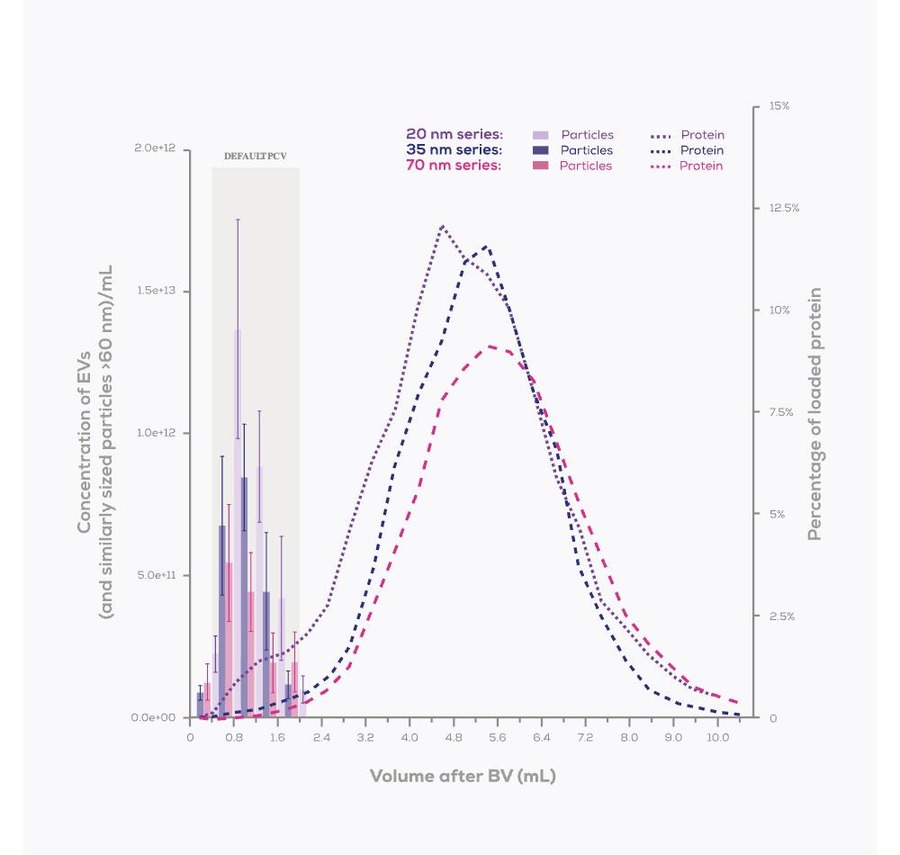
Elution profile for qEVoriginal columns across the 20 nm, 35 nm, and 70 nm resin series — particle concentration (solid bars) separates cleanly from contaminating protein (dotted lines) as the sample moves through the column.
Contaminating protein removed
ApoA1 removed from human plasma
Sample volume range across the column range
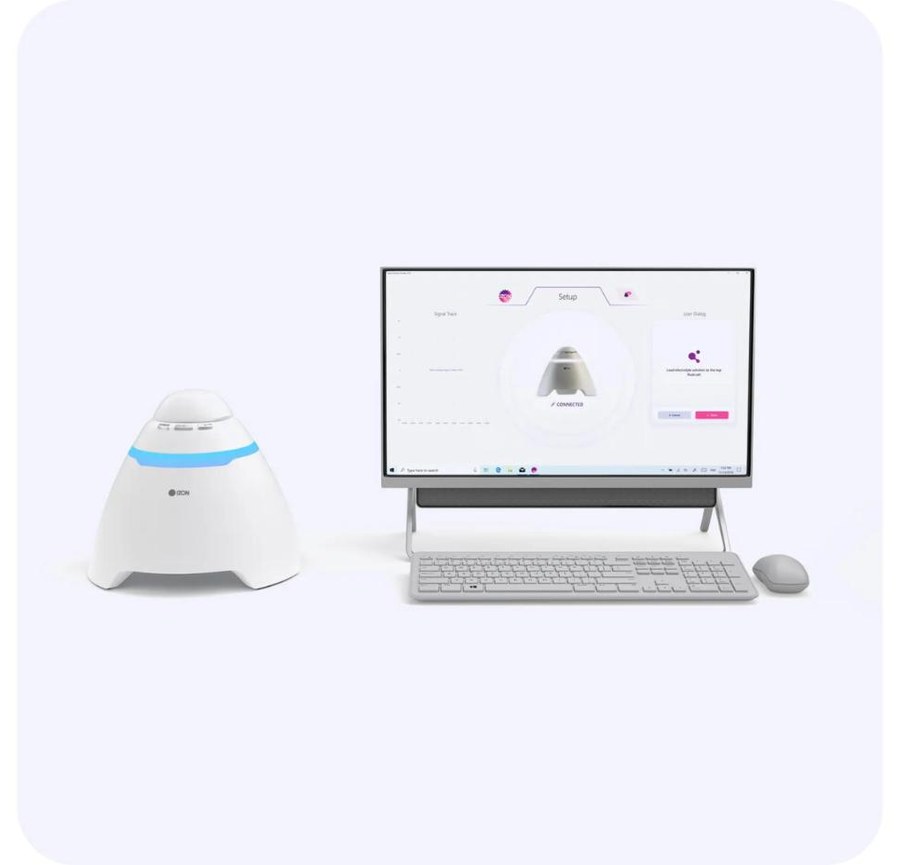
A single-particle measurement technique for nanoparticles between 40 nm and 11 µm. Particles suspended in an electrolyte pass one at a time through a tunable nanopore. Each particle briefly disrupts the electrical current through the pore, creating a "blockade" — the size and frequency of these blockades reveal particle size, concentration, and zeta potential. Every measurement is calibrated against NIST-traceable particles of known size, ensuring accuracy and repeatability. TRPS powers the Exoid.
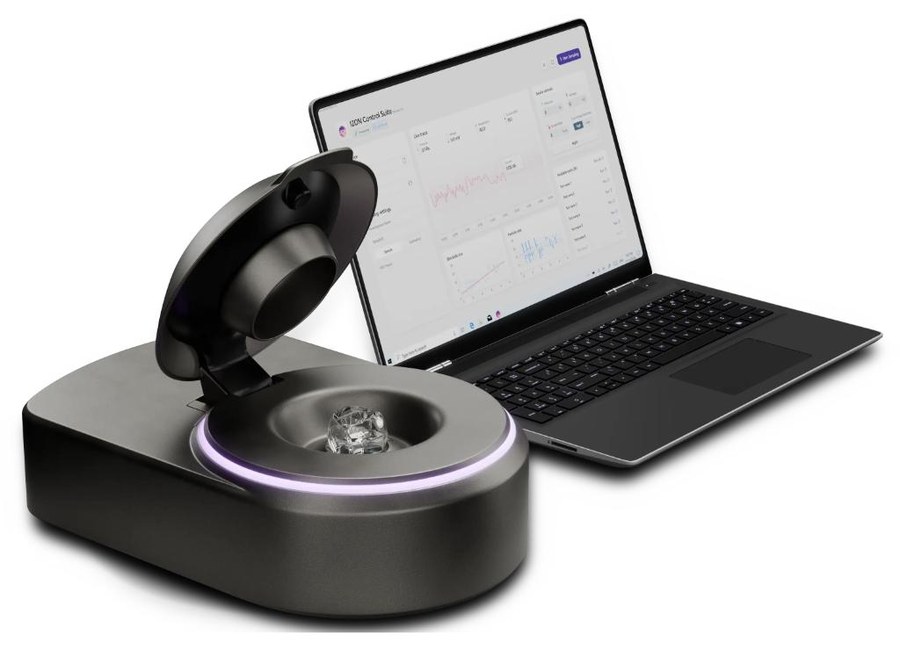
The newest measurement technology in the platform, built around a precision-manufactured, fixed-geometry silicon nanopore chip. As particles pass through, changes in ionic current reveal size, concentration (via event frequency), and zeta potential (via event duration) — on a true particle-by-particle basis, just like TRPS, but with a faster, simpler, more repeatable workflow. NPS powers the Pulsoid, the newest instrument in the range.
Common bulk techniques such as Dynamic Light Scattering (DLS), Nanoparticle Tracking Analysis (NTA), and Phase Analysis Light Scattering (PALS) report population averages — real differences between particles, and meaningful subpopulations, can be hidden beneath those averages. TRPS and NPS measure every particle individually, revealing distributions, heterogeneity, and subtle population differences that ensemble techniques miss entirely.
Compare the Exoid and the Pulsoid →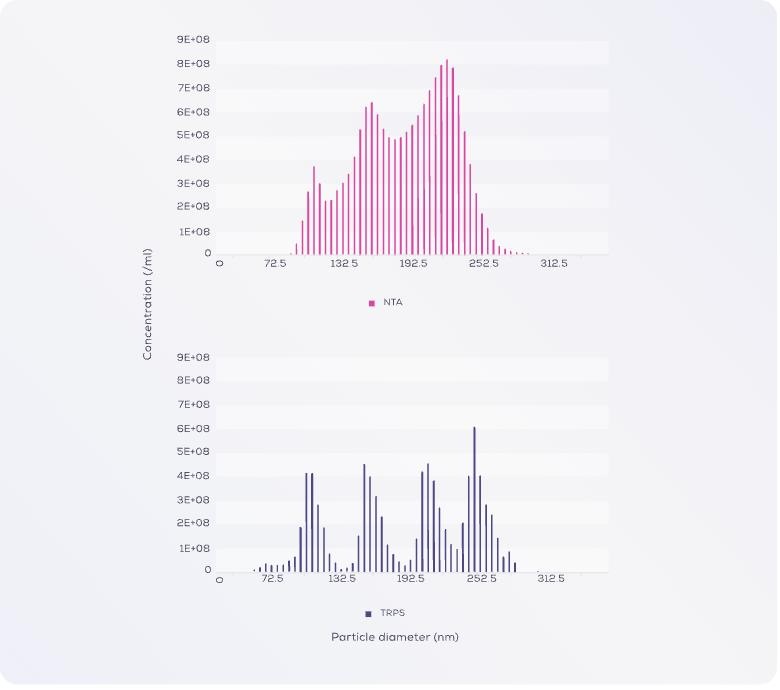
NTA (top) and TRPS (bottom) particle size distributions of the same four-population sample. TRPS resolves each subpopulation with clean baseline separation; NTA shows only partial, blurred separation between them.
Zeta potential, the surface charge that governs colloidal stability, aggregation, and formulation behaviour, is a key measurement of both TRPS and NPS. Rather than reporting one averaged charge value for the whole sample, both techniques measure zeta potential and particle size together on every individual particle — so subpopulations that share a similar size but differ in surface chemistry can be told apart, rather than blended into a single number.
Compare the Exoid and the Pulsoid →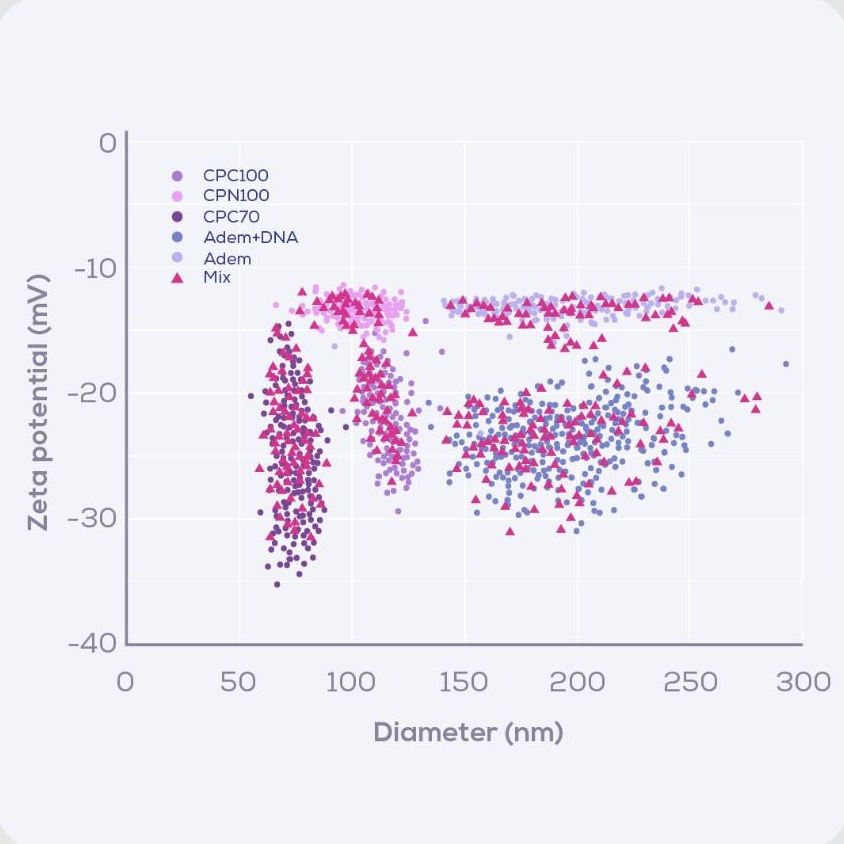
Zeta potential vs. particle diameter for six particle types — bare and carboxylated polystyrene, magnetic beads, and DNA-modified magnetic beads — measured individually (circles) and mixed together (triangles). TRPS resolves each population by size and charge, even within the same mixed sample. Adapted from Vogel et al. (2017), Scientific Reports 7, 17479.
Once a workflow moves beyond manual, bench-scale isolation, which automation platform fits depends on column size: the qEV DXter automates the smaller-volume columns used in high-throughput diagnostic development, while qEV Zenco and qEV TFF automate and scale the larger columns used in bioprocessing and therapeutic manufacture.
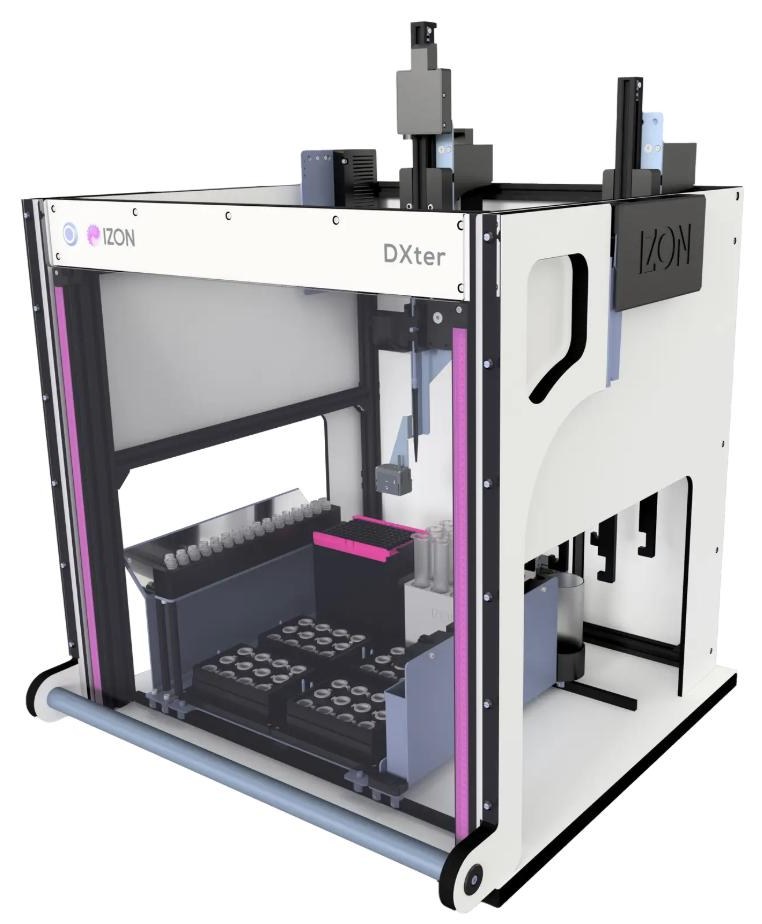
A robotic liquid-handling platform purpose-built for high-throughput isolation on the smaller-volume qEV columns — qEVsingle, qEVoriginal, and qEV1. It automates every step from sample identification to EV isolate collection, running up to 12 qEVoriginal or 24 qEVsingle columns per cycle, so diagnostic developers can process many samples in parallel without manual bottlenecks.
See DXter specifications →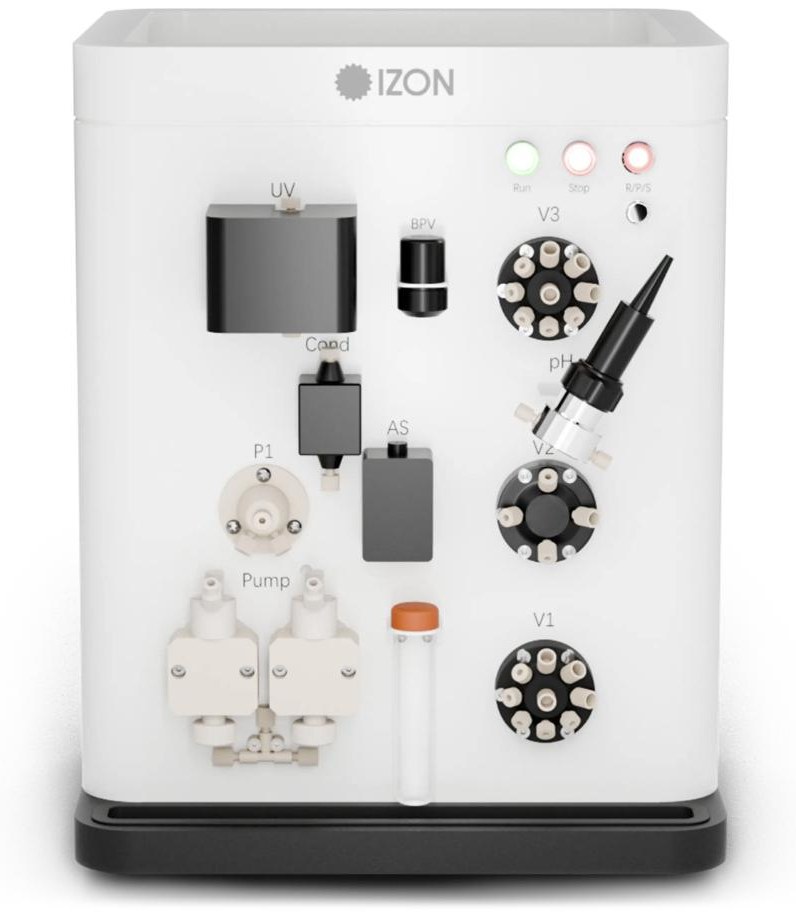
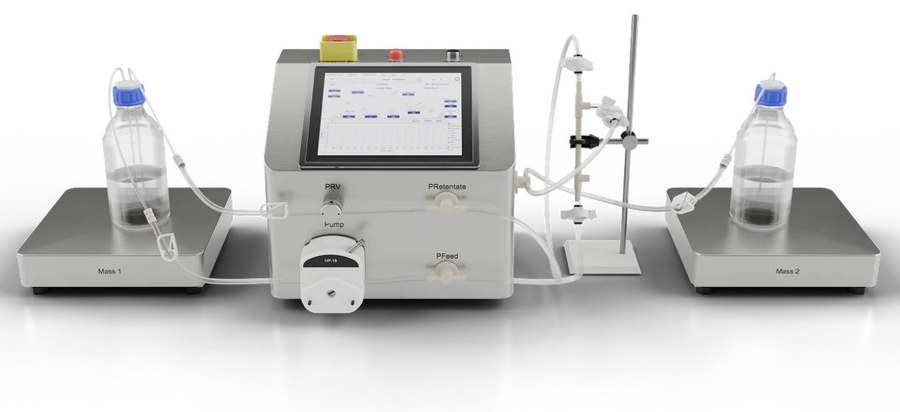
For qEV2, qEV10, qEV100, and custom columns, qEV Zenco automates chromatography with real-time monitoring of UV, pH, conductivity, and flow — including a cGMP-ready "Zenco Pro" variant. Paired with qEV TFF for upstream or downstream concentration and buffer exchange, the two systems scale a bioprocessing workflow from millilitres to litres under a single, automated platform.
See Zenco & TFF specifications →